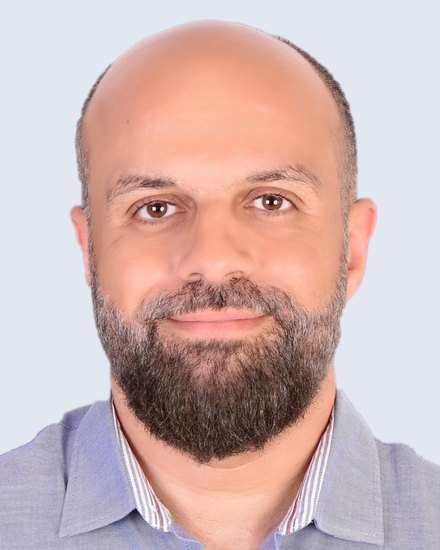
Tenured Associate Professor · Concordia University
Essam Mansour
Head, Concordia Data Systems (CoDS) Lab · Montreal
Essam Mansour builds agents that operate safely on organizational data. Architecture, not only model capability, decides whether an enterprise agent works. He brings a data systems and knowledge graph foundation to automating enterprise operations.
- General Chair, IEEE ICDE 2026
- Editor, ACM SIGMOD Blog
- Head of the CoDS Lab
Recent
What we work on
The barrier to enterprise agents is not model capability. It is that agents have no governed way to accumulate what an organization knows, and no way to establish that what they accumulated is trustworthy. We attack it at the data layer.
-
Governed memory and tacit knowledge
Agent memory as a governed state machine: typed dependencies, semantic revision, declarative forgetting, multi-tenant privacy.
-
Action contracts and governed mediation
Structural enforcement of what an agent may read, write and promote; addresses belief laundering.
-
Validation of agent-generated code
Assertion-based and derivation-aware validation that replaces probabilistic self-judgment.
-
Agent security and threat detection
Multi-agent attack surfaces, memory poisoning and prompt injection. Builds on OCR-APT and MEGR-APT.
-
Graph foundation models for agentic reasoning
Motif-centric inference over enterprise knowledge graphs, giving agents structured recall at scale.
Recent systems
Open-source systems and benchmarks from the CoDS-GCS organization, published at SIGMOD, VLDB, EMNLP, ICDE and CCS.
-
MAFBench
Unified evaluation suite for multi-agent LLM frameworks, with an architectural taxonomy over five dimensions and a controlled study of nine frameworks. Yields six evidence-based design principles.
-
Chatty-KG
Multi-agent system for on-demand conversational question answering over large knowledge graphs. Doubles accuracy (39 to 80 F1) with the same LLM under a better architecture.
-
ReSequel
LLM-assisted SQL rewriting over PostgreSQL, MySQL and DuckDB: templatizes workloads, infers rules from the catalog, verifies candidates on downsampled data. Up to 16× over native engines and 22× over LLM baselines across eight benchmarks.
-
OCR-APT
Reconstructs advanced persistent threat stories from audit logs using subgraph anomaly detection and LLMs, with hard-gating assertion validation.
-
RAGvis
Knowledge-grounded RAG for exploratory data analysis and visualization; a reliable, cost-effective alternative to large-model EDA.
-
CatDB
Data-catalog-guided, LLM-based generator of data-centric ML pipelines, with iterative self-correction validated on the actual data.
External adoption. KGLiDS was adopted by Google and Kaggle teams, and its follow-on system RAGvis is released in Google's own GitHub organization.
Latest news
-
MAFBench accepted at SIGMOD 2027
“Architectural Design, Not Only Model Intelligence, Governs Multi-Agent LLM Performance”: a controlled study of nine multi-agent LLM frameworks at fixed LLM and task, yielding an architectural taxonomy over five dimensions and six evidence-based design principles.
-
Demonstration Chair of VLDB 2027
Essam Mansour will serve as Demonstration Chair for VLDB 2027, alongside his term as General Chair of IEEE ICDE 2026.
-
Three PhD students and one MSc student join CoDS
Yomna Gharib, Loubna Guelmani and Qizhi Wang (PhD) and Farbod Aminnezhad (MSc) start in September 2026, working on agent security, governed memory, validation of agent-generated code, and action contracts.
-
ReSequel: robust LLM-assisted query rewriting, at VLDB 2026
With Saeed Fathollahzadeh and Matthias Boehm. Up to 16× faster than native PostgreSQL, MySQL and DuckDB across eight benchmarks.
-
General Chair of IEEE ICDE 2026, Montreal
Essam Mansour served as General Chair with Fei Chiang, and joined the panel “What can agents do for databases?” with Fatma Özcan, Wenjie Zhang, Aditya Parameswaran and Bolin Ding.
-
Vision paper: “Is Agent Memory a Database?”
Governed Evolving Memory for long-term agents, with a prototype on a property-graph backend (MemState).